
Why Businesses Struggle with Waiting Time & How Queue Management Systems Solve It
Explore why businesses across industries struggle with long waiting times and how smart queue management systems like MyTurn provide effective solutions.

MyTurn Product Team
Customer Experience Platform Experts
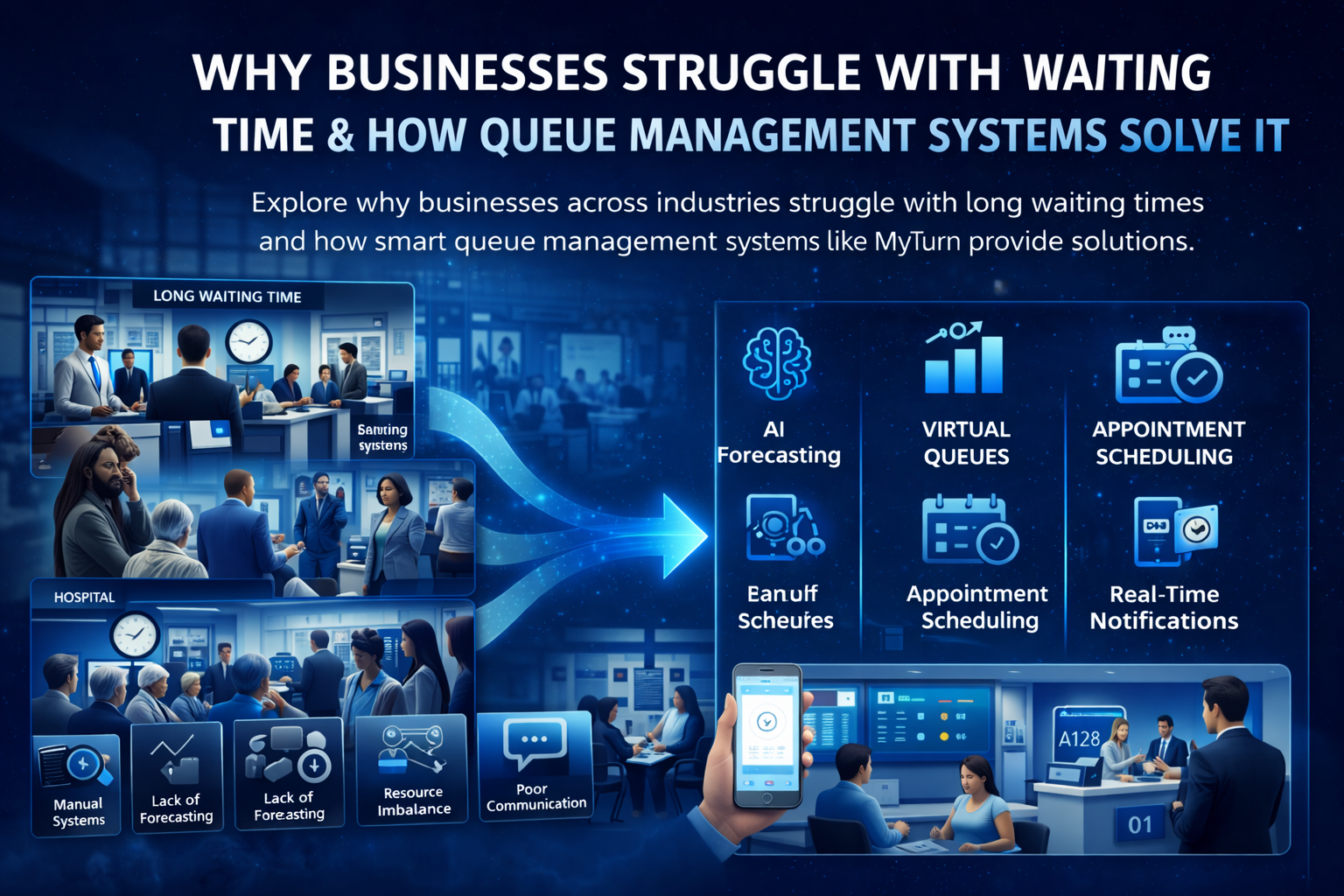
Why Businesses Across Industries Struggle with Customer Waiting Time and How Smart Queue Management Systems Solve It
Across industries such as banking, healthcare, retail, public administration, telecom, and utilities, one common challenge continues to affect customer experience — long waiting times.
Regardless of the type of service offered, businesses that deal with customer interactions must manage queues efficiently to ensure satisfaction and operational success.
However, many organizations still rely on outdated systems that fail to meet modern expectations. Customers today demand speed, convenience, and transparency.
When these expectations are not fulfilled, it leads to frustration, negative experiences, and ultimately loss of business.
Smart queue management systems like MyTurn are designed to address these challenges by optimizing customer flow, reducing waiting time, and improving overall service efficiency.
The Growing Problem of Waiting Time in Modern Businesses
Waiting time has become a critical factor influencing customer satisfaction and loyalty. In an era where instant service is expected, delays can significantly impact business performance.
Customers no longer tolerate long queues or inefficient processes. They expect quick and seamless service experiences across all touchpoints.
Businesses that fail to meet these expectations risk losing customers to competitors who offer better service.
Major Causes of Long Waiting Times
1. Manual and Outdated Processes
Many businesses still rely on manual systems for managing queues, such as paper tokens or basic numbering systems. These methods are slow, prone to errors, and difficult to scale during high demand.
Manual processes require constant human intervention, which increases workload and reduces efficiency. Staff must spend time organizing queues instead of focusing on delivering quality service.
Without automation, businesses struggle to handle large customer volumes effectively, leading to longer waiting times and reduced productivity.
2. Lack of Demand Forecasting
Customer demand varies throughout the day, week, and year, but many businesses lack the tools to predict these fluctuations. This results in unpreparedness during peak hours.
Without proper forecasting, businesses cannot allocate resources effectively, leading to overcrowded service areas and long queues.
Predictive analytics is essential for managing customer flow efficiently and avoiding bottlenecks.
3. Inefficient Resource Allocation
Many organizations struggle to distribute staff and resources based on demand. Some service points become overloaded, while others remain underutilized.
This imbalance leads to delays and inefficiencies, as customers wait longer than necessary for service.
Optimizing resource allocation is crucial for improving service speed and efficiency.
4. Lack of Real-Time Visibility
Without real-time data, businesses cannot monitor queue length, waiting time, or service performance effectively.
Managers are unable to make quick decisions to address issues, resulting in prolonged delays.
Real-time insights are essential for proactive queue management.
5. Poor Customer Communication
Customers often have no information about their position in the queue or expected waiting time. This creates uncertainty and frustration.
Lack of communication reduces trust and makes the waiting experience more stressful.
Transparent communication is key to improving customer satisfaction.
Impact of Long Waiting Times on Businesses
Customer Dissatisfaction
Long waiting times create negative experiences, leading to dissatisfaction and complaints. Customers expect efficient service, and delays reduce their confidence in the brand.
Dissatisfied customers are less likely to return, which affects long-term business growth.
Revenue Loss
In industries like retail and telecom, long queues can lead to abandoned transactions and lost sales opportunities.
Customers may leave before completing their purchase or service request.
Reduced Staff Productivity
Employees who spend time managing queues have less time to focus on customer service.
This reduces overall productivity and increases stress levels among staff.
Damage to Brand Reputation
Poor service experiences can harm a company’s reputation, especially in the age of online reviews and social media.
Negative feedback spreads quickly, affecting brand perception.
What is a Smart Queue Management System?
A smart queue management system is a digital solution that organizes customer flow using virtual queues, real-time updates, and intelligent routing.
Customers can join queues remotely, track their position, and receive notifications about their turn.
This improves convenience, efficiency, and transparency.
How MyTurn Solves Waiting Time Challenges
1. Virtual Queue System
MyTurn allows customers to join queues digitally instead of waiting in physical lines. This reduces congestion and improves the overall environment.
Customers can use their waiting time productively instead of standing in queues, which enhances their experience.
Virtual queues significantly reduce perceived waiting time and improve satisfaction.
2. Appointment Scheduling
Customers can book appointments in advance, ensuring a structured flow of visitors throughout the day.
This helps avoid peak-time congestion and ensures better planning.
Appointment scheduling creates a more organized and predictable service experience.
3. Real-Time Notifications
Customers receive updates about their queue status and waiting time, improving transparency.
This reduces uncertainty and anxiety associated with waiting.
Clear communication enhances trust and satisfaction.
4. Smart Routing
Customers are directed to the appropriate service point based on their needs, reducing delays.
This ensures faster service and minimizes confusion.
Efficient routing improves overall workflow.
5. Data Analytics
MyTurn provides valuable insights into customer flow, peak hours, and performance metrics.
Businesses can use this data to optimize operations and improve efficiency.
Continuous improvement becomes possible with data-driven decisions.
Benefits Across Industries
Improved Customer Experience
Faster service and transparent processes create a positive experience for customers.
Increased Efficiency
Automation reduces manual tasks and streamlines operations. Employees can focus on delivering quality service.
Higher Revenue
Reducing waiting time increases conversion rates and reduces customer churn.
Better Decision-Making
Data insights help businesses make informed decisions about staffing and operations.
Future of Queue Management
The future of queue management lies in digital transformation, automation, and AI-driven systems.
- Predictive analytics
- Contactless experiences
- Fully digital customer journeys
Businesses must adopt these technologies to remain competitive.
Why Choose MyTurn?
MyTurn provides a scalable and intelligent solution for managing queues across industries.
- Easy integration
- Real-time insights
- Improved customer experience
It helps businesses optimize operations and grow.
Conclusion
Long waiting times are a common challenge across industries, but they can be effectively addressed with smart queue management systems.
By adopting solutions like MyTurn, businesses can reduce waiting times, improve efficiency, and enhance customer satisfaction.
Investing in digital queue management is essential for long-term success in a competitive market.
Ready to optimize your workflow?
Contact our experts to see how Why Businesses Struggle with Waiting Time & How Queue Management Systems Solve It can be tailored to your specific business needs.
Talk to an Expert